
Ameilia's dad wasn't there

A Familiar Story

The story he was reading was remarkable. It was about a young girl whose life, by all accounts, shouldn’t have amounted to much --- but for God.

Raised by her mother in a poverty-stricken neighbourhood in Mexico, the young girl saw firsthand how the drug trade destroyed lives and tore families apart. She knew the pain of an absentee father whose criminal activities landed him in prison time and time again. She watched her mother juggle multiple jobs as sole provider for the family. And then her mother died.

It started to sound all too familiar.

Pride and Pain

He looked across the room at his daughter, Amelia. Though her name was not on the book, he knew it was about her. And him.

She was the young girl who said yes to God and missions. He was the absentee father who spent much of her childhood behind bars.

The story ended with his daughter serving God as a missionary --- and him back in prison.

“It’s such a sad story,” he told Amelia. “It doesn’t tell the rest of the story. … Please, have them tell the rest of the story.”
 

“IT’S SUCH A SAD STORY. … PLEASE, HAVE THEM TELL THE REST OF THE STORY.”

The Rest of the Story

As we sat in Amelia’s living room in a neighbourhood near the Triqui people, she told me the rest of the story.

Some time after her father was out of prison again, Amelia’s little sister, Gabi, joined him in Tijuana for six months.

“She always had the heart of an evangelist,” Amelia said. “And during that stay, she shared the chronological Bible lessons with our dad and he got saved.” A big smile crossed Amelia’s face. “From that time on he has been a faithful follower of Christ. His friends cannot believe how much he’s changed.”

And at times, neither can Amelia’s dad. He knows that this story could have ended much differently --- but for God.

Amelia said yes to God and today is translating Scripture into the language of the Triqui people of Mexico. Could you pray for Amelia today?

Look into the Firm Foundations Bible lessons

A Form of Religion Without the Relationship

Exposure

Miguel Peña didn’t start out to be a missionary. As a chemical engineer, he worked for 15 years for a private company. During those years, he was exposed time and time again to missions through his church. Little did he know that God was preparing him to be a missionary in his home country of Mexico.

Mixed Beliefs

But God was. He was preparing Miguel to work among the Triqui people of San Quintín, Baja California, Mexico.  After moving in among the Triqui people, gaining fluency in their language, and developing relationships with the people, it became clear that syncretism was a huge problem among the Triqui.

“They’ve mixed their animistic beliefs with ... Christianity,” Miguel said.

He explained how they worship the sun and make sacrifices to the rain god so that it will rain. And when someone dies, they put clothing, money and other items in the coffin to be used on their long journey. They never say where that journey will take them because they really don’t know. They have no security of what eternity holds.

On the other hand, some believe they are Christians simply because they go to church, while many are baptized for the material gain of new clothing, food and other gifts that are offered by “churches” competing for their membership. Others attend services, praying and applauding with no real understanding.

They have a form of religion with no real relationship with their Creator.
 

"THEY’VE MIXED THEIR ANIMISTIC BELIEFS WITH ... CHRISTIANITY. ... SEEING THIS REALITY MOTIVATES ME AS I TRANSLATE ... SO THAT THEY CAN HEAR THE GOSPEL IN A WAY THAT’S UNDERSTANDABLE TO THEM."


Motivation

“Seeing this reality motivates me as I translate and prepare chronological Bible lessons so that they can hear the gospel in a way that’s understandable to them in their own language and culture,” Miguel says. “It’s hard work, but God helps me.”

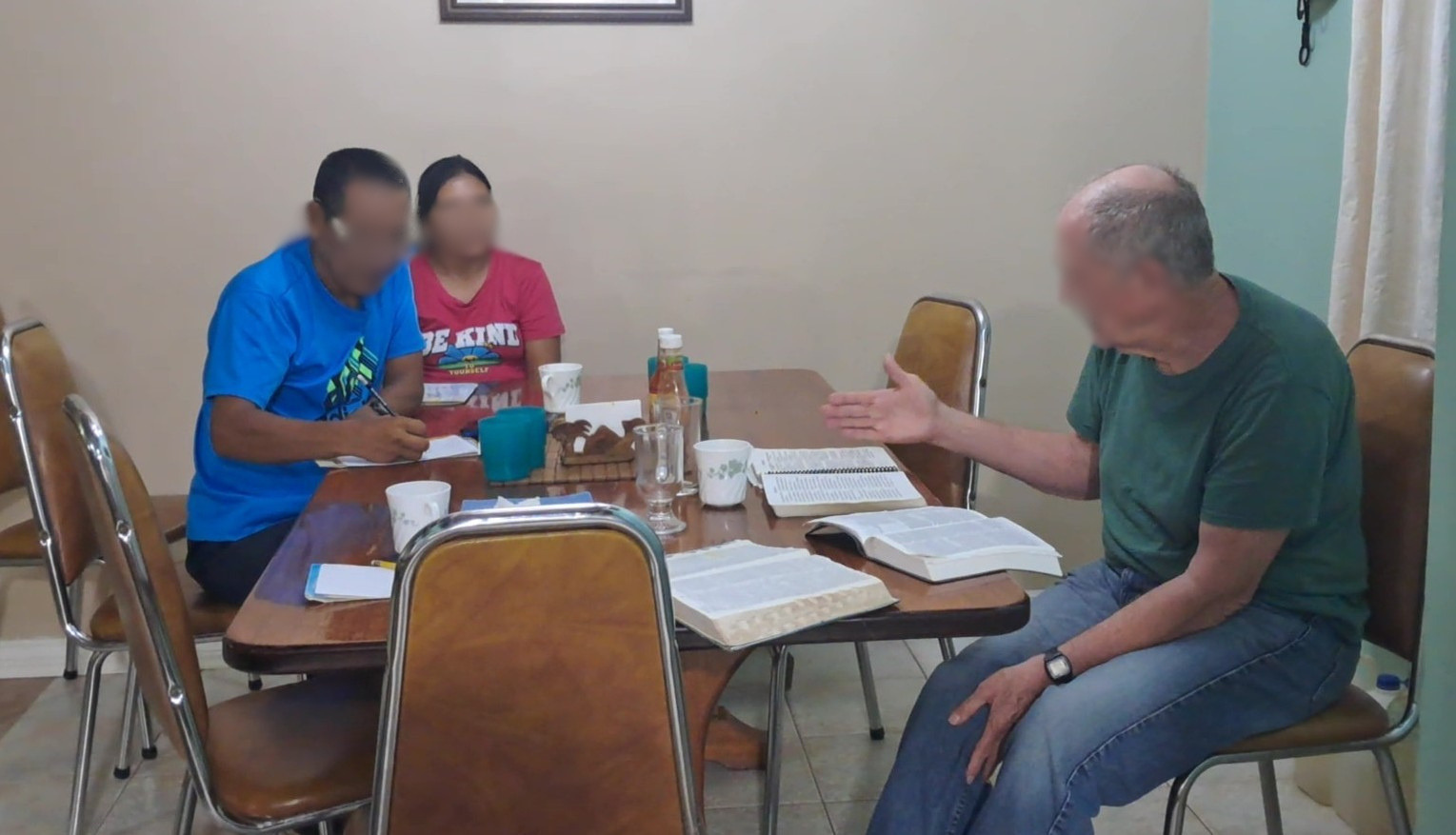
The first 30 lessons are ready to be checked and then revised. Miguel, along with the his co-workers Amelia Orrostieta and Gricelda Villalba, is looking to the day when teaching will begin and the Triqui people will have their eyes opened to the truths of God’s Word.

The Church is not the Steeple

The Church Is not the Steeple

What does a tribal church look like? Does it have a steeple? A cross hanging at the front of the church? A fancy pulpit? Most likely not. It may have a palm roof, dirt floors and benches made from rough-hewn lumber. But does that make it any less a church? Not at all. And the truth of it is, the church isn’t the building, but the people.

"WHAT A DAY IT IS WHEN A CHURCH PLANTER MOVES FROM HAND-FEEDING SPIRITUAL BABES TO SITTING UNDER THE TEACHING OF MATURE BELIEVERS WHO ARE SHEPHERDING THE TRIBAL CHURCH."


Infancy to Maturity

And it is that precious group of new believers that church planters wrap their spiritual arms around. They feed them from the Word, nurture them, and equip them to lead the church.

What a day it is when a church planter moves from hand-feeding spiritual babes to sitting under the teaching of mature believers who are shepherding the tribal church.

Mark and Joyce Cain know that feeling.

And it only gets better.

Multiplication

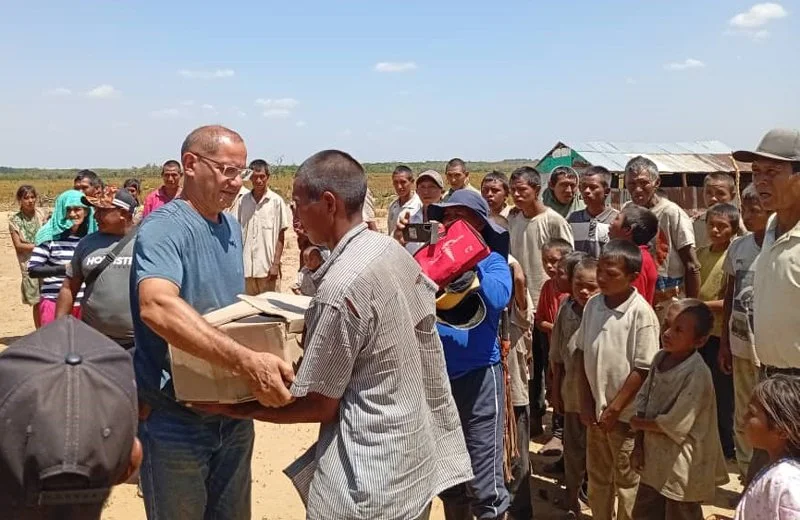
In 2013, Mark and Joyce rejoiced when Guahibo believers baptized 17 new believers. And in 2105, they are rejoicing again.

“This morning we got word that through [the Guahibo church’s] ministry of evangelization in another village … they baptized 30 new believers,” Mark and Joyce wrote. “Wow! God is using them for His glory.”

That is the end-result of equipping leaders to lead. Pray for the Guahibo church to continue reaching out to the unreached.